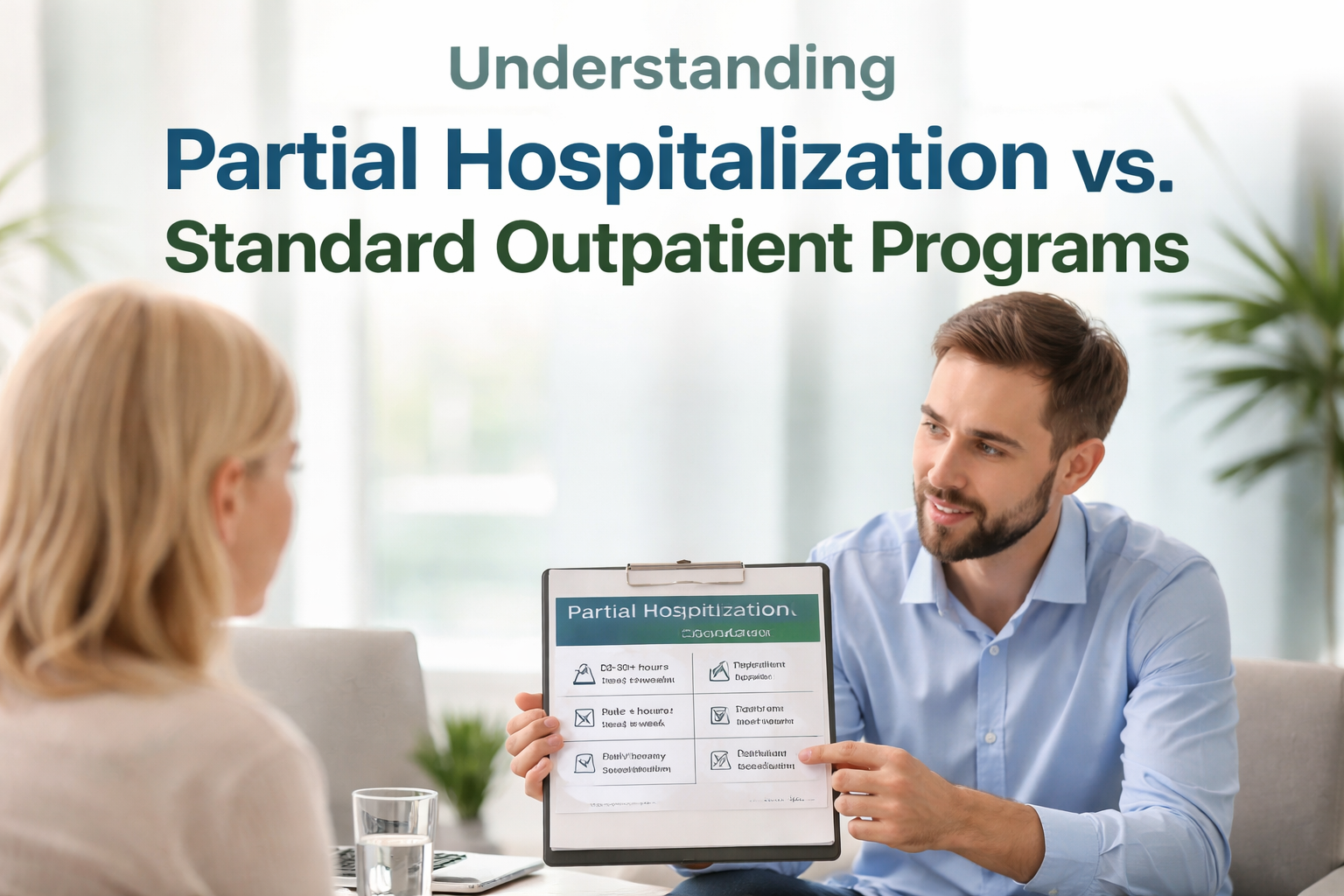
The level of care is one of the most critical areas of decision-making when it comes to the treatment of substance use. Many individuals and families find themselves comparing Partial hospitalization vs outpatient programs without fully understanding how they differ.
There is no universal addiction recovery. The severity of care required will be based on aspects such as substance use history, mental health requirements, risk of relapse, and day-to-day activities. Understanding the difference between PHP and outpatient care can help you make a confident and informed decision.
This guide dissects both options of treatment, describes their nature, and assists you in choosing which one might suit you.
Before comparing programs directly, it’s important to understand the broader levels of care in addiction treatment. Treatment is normally conducted in phases depending on severity:
Each step represents a different level within the addiction treatment levels of care, designed to meet individuals where they are in recovery.
A Partial hospitalization program (PHP) is a highly structured, intensive form of outpatient treatment. Even though the patients do not actually reside at the facility, they spend most of the day in sessions of treatment, a few days per week.
To be concise, PHP offers good clinical services and also gives patients an opportunity to go home on a daily basis at the end of the day.
Standard outpatient treatment is a less intensive level of care. Those who are taking therapy sessions do it a few times a week but over a shorter time, 1-3 hours at a time.
When comparing PHP vs outpatient rehab, the primary distinction is intensity and time commitment.
The difference between PHP and outpatient treatment largely comes down to structure, time involvement, and clinical supervision.
| Factor | Partial Hospitalization (PHP) | Standard Outpatient |
| Hours Per Week | 20–30+ hours | 3–9 hours |
| Structure | Highly structured | Flexible |
| Clinical Oversight | Frequent monitoring | Periodic check-ins |
| Best For | Moderate–severe addiction | Mild addiction or step-down care |
| Psychiatric Services | Often included | Limited |
When evaluating intensive outpatient vs partial hospitalization, it’s important to recognize that PHP offers a stronger support system, while outpatient programs prioritize flexibility and independence.
Many people also compare intensive outpatient vs partial hospitalization programs. The intensive outpatient programs (IOP) lie between the PHP and the normal outpatient care.
Understanding these distinctions within addiction treatment levels of care ensures that patients receive the appropriate level of support based on their current stability and risk factors.
One of the most important steps in recovery is choosing the right rehab program. Proper care may play a great role in long-term success.
An expert evaluation in a competent treatment addiction center can assist in identifying the program that suits your needs most.
In order to investigate opportunities, go to:
Yes. The process of recovery is dynamic, and a number of people transit between levels of care.
Patients may:
Such a dynamic style of treatment ensures your treatment is responsive to improvement rather than fixed.
For you to understand the difference Between Partial hospitalization and outpatient programs is essential when you are navigating your recovery options. You should look out for both services, which serve valuable roles within the broader levels of care for addiction treatment, but the right choice depends on your unique circumstances.
When you are comparing PHP vs outpatient rehab, evaluating intensive outpatient vs partial hospitalization, or simply choosing the right rehab program for your recovery, you need professional guidance that makes all the difference for you.
At Ranch Creek Recovery, we plan treatments that are thoughtfully tailored to meet each individual’s needs. Compassionate care takes the form of structured PHP services, flexible outpatient programs, and so on, aimed at facilitating long-term recovery and life-long change.
Recovery is not a matter of selecting the most intensive one; it is a matter of selecting the right one in the context of where you are even today.
A PHP is an intensive outpatient treatment program that provides structured therapy for several hours per day while allowing patients to return home at night.
Standard outpatient treatment involves fewer weekly hours and less clinical supervision compared to PHP.
Effectiveness depends on individual needs. PHP may be more appropriate for moderate to severe addiction, while outpatient care works well for stable individuals.
PHP typically requires 20–30 hours weekly, whereas outpatient care usually involves 3–9 hours per week.
Yes. Many patients step down from PHP to outpatient care as they progress in recovery.







Space is Limited. Call to Check Availability.
(877) 997-8931