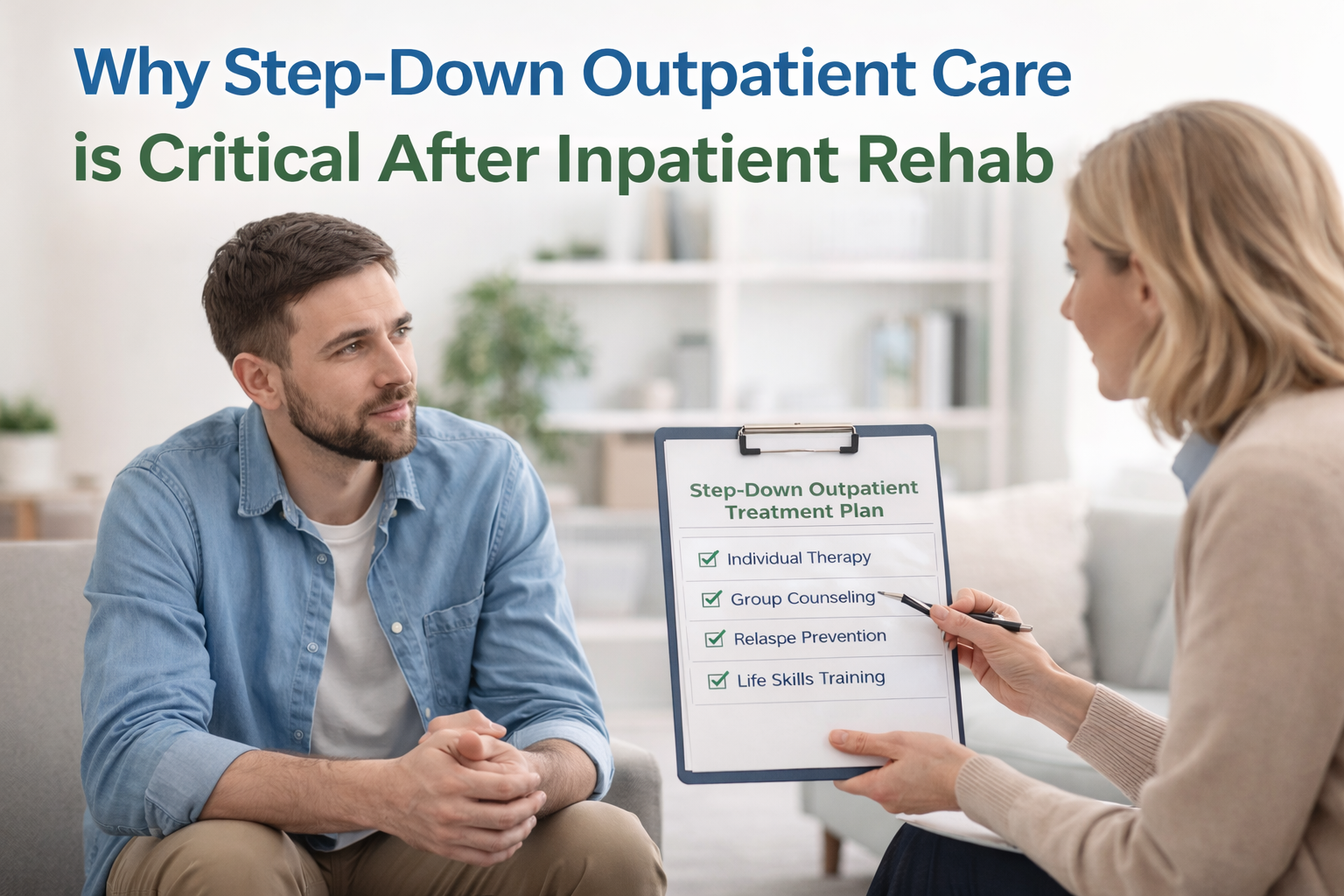
Once the inpatient rehab is complete, many of them have a certain feeling of accomplishment, which is why the journey to permanent recovery does not end the moment they get out of the facility. Going through the experiences of inpatient care to independent living may be difficult, and at this stage, the chances of relapse tend to occur. This is where step-down outpatient care becomes a critical part of the recovery process.
Step-down care assists individuals to move out of the highly-intensive environment of the inpatient rehab, to a more flexible, albeit structured, environment of outpatient care. The strategy will help in ensuring that recovery proceeds in a supportive approach whereby individuals will sustain their progress, gain confidence, and achieve stability in their long-term sobriety.
Let’s dive into why outpatient care after inpatient rehab is crucial and how it plays a vital role in sustaining recovery.
Step-down outpatient care refers to a structured treatment process designed to help individuals transition from inpatient care to outpatient services. This level normally follows the first stage of addiction treatment since the clients are now stabilized and do not require full-time residential treatment.
The goal of step-down care is to offer a continuum of care in rehab, where individuals continue their recovery with professional guidance, but with the increased flexibility of returning home each evening.
These services can gradually be reduced as the person advances in his or her recovery and can slowly start to incorporate them in his or her daily life, still getting the support he or she requires.
The shift from inpatient to outpatient care is a critical component of recovery. Although inpatient rehab offers a more intense and immersive treatment program, the transition to outpatient care assists people in continuing to use the tools they have acquired when faced with the challenges of the real world.
Here are the key reasons why outpatient care after inpatient rehab is so important:
In the case of inpatient rehab, patients get deep-level treatment, training, and support. Step-down outpatient care helps reinforce these skills in everyday situations, providing an opportunity to apply coping strategies, mindfulness, and relapse prevention techniques in real-time.
It may be challenging and daunting to move out of a highly structured inpatient environment into independent living. Outpatient care offers a safety net at such a time, so that one is not left struggling to get back to a normal living life without support.
The pressure of life outside inpatient rehab may result in a high risk of relapse after the inpatient rehab. Step-down care offers ongoing addiction treatment support, ensuring that individuals have professional guidance and accountability as they face potential triggers, stressors, and temptations.
Long-term recovery planning requires gradual reintegration into society, work, or school. Step-down care gives a highly organized transition cloud to assist persons to resume these duties without necessarily losing gains in recovery.
Having left an inpatient rehab, most people do not know what to do next. Post-inpatient addiction treatment is essential because it provides the structured follow-up care needed to avoid relapse and maintain recovery.
Post-inpatient care could involve:
Without step-down outpatient care, there is a higher likelihood of feeling unsupported once inpatient treatment ends. The fact that the care is slowly lowered gives the clients the chance to maintain the structure they require and regain their independence.
Preventing relapse after inpatient rehab is one of the main reasons for transitioning to step-down care. Studies demonstrate that people who are treated continuously after inpatient treatment have less chance of relapse as compared to those who are not.
Here’s how step-down outpatient care helps prevent relapse:
Step-down care brings the necessary stability and resources to clients that allow them to maintain their recovery in the long term.
The determination of the right degree of care will be based on a number of variables, including the extent of addiction, individual situations, and history of treatments. While some individuals may be ready for standard outpatient treatment, others may need a more intensive step-down outpatient care approach.
After letting outpatient care come after inpatient rehabilitation is a great idea. The following is how to know whether step-down care is correct or not:
Have you done any detox and inpatient rehabilitation?
Step-down care is an intermediary between those who come out of inpatient care and those who come out of rehab; that is, it incorporates the acquired lessons into the real world.
Find out more about the possible treatment addiction centers here: Addiction treatment center.
Step-down outpatient care is a vital part of the recovery process, helping individuals transition smoothly from the immersive environment of inpatient rehab into everyday life. This level of care continues to provide the person with structure, support, and relapse prevention strategies to make sure that recovery does not come to an end with the conclusion of the inpatient rehab.
At Ranch Creek Recovery, we understand the importance of post-inpatient addiction treatment and offer compassionate, structured care for individuals transitioning from inpatient to outpatient services. Our programs offer the means to continue improvement, prevent relapse, and achieve long-term recovery.
The process of recovery does not stop with the termination of treatment. It does, and so can your trip to lifetime health and happiness with the proper assistance.
Step-down outpatient care refers to a treatment program that helps individuals transition from inpatient rehab to a less intensive outpatient program while maintaining recovery support.
Outpatient care helps individuals apply recovery skills in their daily lives, manage transition stress, and prevent relapse by providing ongoing professional support.
Step-down outpatient treatment can last from several weeks to several months, depending on individual progress and recovery needs.
Step-down outpatient care benefits individuals who have completed inpatient rehab and are looking for continued support as they reintegrate into their normal lives.
Yes, step-down outpatient care reduces the risk of relapse by providing ongoing therapeutic support, accountability, and education about managing triggers and stress.








Space is Limited. Call to Check Availability.
(877) 997-8931